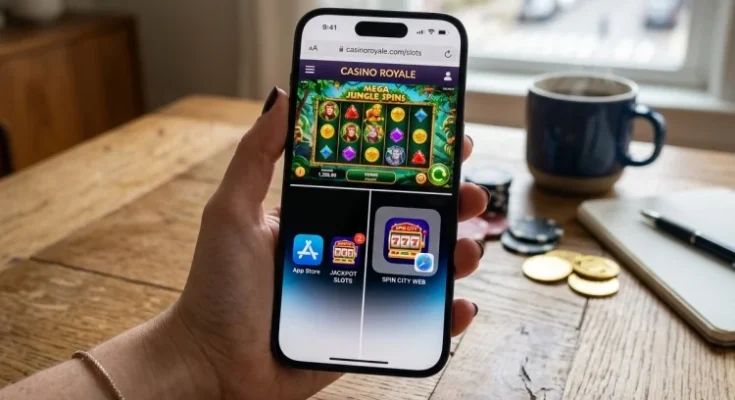

Free Jackpot Slots: Can You Really Win Money Without Depositing?
“Play free and win the jackpot” sounds simple until you discover that the word free can mean several completely different things online. A demo slot, promotional free spins, bonus credit, and a genuine free-entry promotion are not the same product.
That distinction is essential when exploring Free Jackpot Slots. A demo may show you a £100,000 jackpot win that has no cash value, while promotional spins could potentially produce real winnings under specific terms.
Knowing which type of free play you are using helps you understand exactly what is available – and prevents a virtual jackpot celebration from becoming a very disappointing withdrawal attempt.
“Free Jackpot Slots” Can Mean Several Things
The phrase is often used loosely.
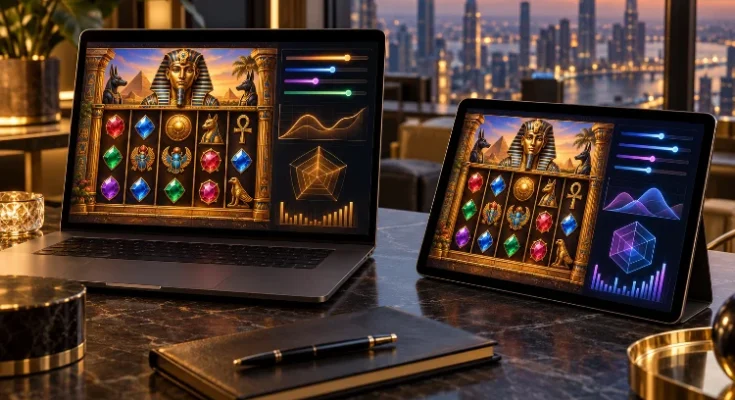
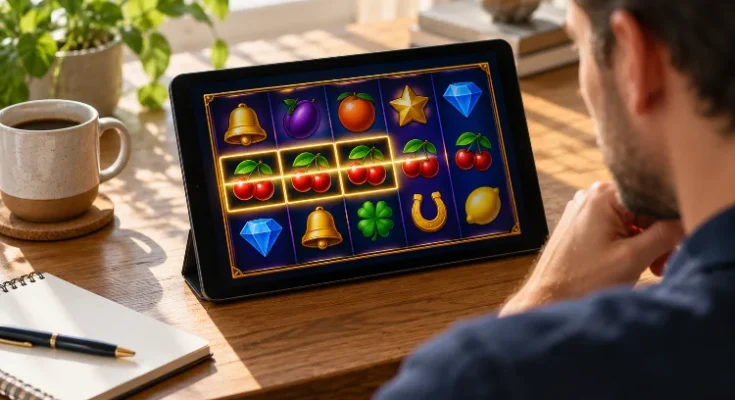
The most common meaning is a slot demo where you receive virtual credits and can play without creating a real-money wager.
But “free” might also refer to casino free spins, bonus credit, promotional daily games, or even a separate free-entry prize competition.
These formats should not be lumped together.
The UK Gambling Commission formally defines play-for-free as a demonstration version of a real-money game where the customer does not stake or win money or money’s worth.
That definition makes ordinary demo mode simple: no real stake, no withdrawable real jackpot.
Promotional products are different because the operator can offer prizes or bonus funds under defined conditions.
Understanding which category you are dealing with is step one.
Demo Credits Look Like Money but Are Not Cash
Many free slot demos deliberately use familiar currency-style balances.
You might start with $5,000 and finish with $12,600.
That can make the balance feel surprisingly real.
However, those numbers function as simulation credits. They let the game calculate stakes and payouts in exactly the sort of format you would see with real money, but they do not automatically represent an account balance you can withdraw.
This design is useful because it lets you test whether a $0.20, $1, or $5 stake feels understandable within the game’s paytable.
The virtual balance also shows how quickly repeated bets can move your bankroll up or down.
But clicking “cashier” after a fictional $50,000 Grand Jackpot will not convert the demo result into real funds.
That limitation is the central rule of ordinary free-play slots.
Why Do Free Jackpot Games Show Huge Prizes?
Because the purpose of a demo is partly to demonstrate the full game.
If the real-money version includes a jackpot feature, a useful free version should let players understand what that feature does.
UK Gambling Commission rules for corresponding play-for-free games require the free version to implement the same game rules and accurately represent winning probabilities and prize distribution.
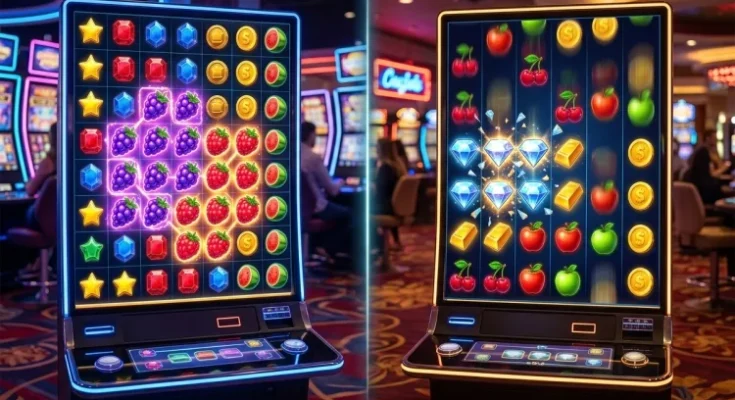
That means a demo can show large wins, free-spin rounds, jackpot animations, multipliers, or other expensive-looking outcomes.
Virtual payouts should also be proportionate to the paid game.
The fact that a £250,000 prize appears on screen therefore does not imply you have won £250,000.
It simply means the simulation produced an outcome corresponding to that prize within its virtual economy.
The animation can be authentic while the monetary value remains fictional.
Can Promotional Free Spins Produce Real Winnings?
Potentially, yes—and this is where the terminology changes.
A casino promotion might give you 10, 20, or 50 free spins on a real-money slot. Those spins are not necessarily the same as unlimited demo spins.
They can operate under promotional rules that determine whether resulting winnings become cash, bonus funds, or another restricted balance.
The UK Gambling Commission says operators should clearly distinguish customers’ own funds from bonus funds and clearly explain restrictions associated with promotional money.
For example, a free-spin promotion might limit the stake value per spin or apply specific game eligibility.
Terms can also vary by jurisdiction and operator.
Therefore, seeing “free spins” should prompt you to read the offer rules rather than assuming either that everything is withdrawable or that everything is worthless.
That is very diffrent from pure demo play.
What About No-Deposit Jackpot Offers?
A no-deposit promotion can provide something of real value without requiring an initial deposit, but that still does not make it identical to a free slot demo.
The operator may award free spins or promotional credit after registration or completion of another allowed condition.
Any potential winnings then depend on the offer rules and applicable regulations.
This is also different from a genuine free draw, where entry can occur without gambling.
The UK Gambling Commission explains that free draws may operate with genuinely free participation routes, while prize competitions are governed by different principles involving skill, judgment, or knowledge.
The key point is to identify the product category.
A demo jackpot is simulated.
A bonus promotion may provide restricted promotional value.
A free draw can involve an actual prize under its own conditions.
The word “free” does not tell you enough on its own.
Are Progressive Jackpots Available in Demo Mode?
They may be represented, but the live cash pool requires more careful interpretation.
A progressive jackpot is defined by the UK Gambling Commission as an incremental prize that grows through contributions from real money staked within the game.
Your fictional $1 demo spin cannot contribute actual cash to that live prize pool in the ordinary sense.
A free version may therefore simulate jackpot values or provide a representative version of the progressive feature.
This is why a demo jackpot meter should not automatically be treated as a live cash balance.
Imagine a demo displays a Grand Jackpot of $750,000 and you trigger it.
That does not necessarily mean the live $750,000 network jackpot was actually removed for real-money players.
The demonstration can reproduce the experiance without changing the genuine progressive pool.
Can Free Play Help You Find “Hot” Jackpot Slots?
No reliable evidence comes from a short demo session.
Suppose Slot A gives you several large virtual prizes while Slot B empties your virtual balance quickly.
It is tempting to call Slot A “hot” and switch to real-money play.
The problem is randomness.
Short-term outcomes vary heavily, particularly in volatile jackpot games. RTP also becomes meaningful over very large numbers of plays rather than a few dozen or hundred spins.
The UK Gambling Commission explains that actual RTP can move significantly above or below theoretical RTP over limited samples and generally moves closer to the designed value as the number of games increases.
A good demo session therefore proves only one thing: you had a good demo session.
It does not create a reliable forecast.
Demo Mode Is Best for Learning Jackpot Mechanics
This is where free jackpot games become genuinely useful.
Some modern jackpot slots are complicated. A single title can have Mini, Minor, Major, and Grand prizes alongside wilds, collectors, bonus wheels, respins, and free-spin modes.
Understanding all of that while risking money can be difficult.
Free play lets you learn where the paytable is located, what symbols trigger features, how jackpot meters behave, and how different stake sizes change the displayed total bet.
You can also decide whether the game itself is entertaining.
A jackpot slot with spectacular advertising might feel slow or confusing once you actually try it.
Demo mode gives you that information without the finacial cost of experimenting.
That is a much more realistic benefit than trying to use free spins to predict future winners.
What You Cannot Assume From a Demo Jackpot
You cannot assume a virtual jackpot can be withdrawn.
You also cannot assume every real-money casino offers exactly the same version of the game.
RTP settings can vary between approved configurations, while jackpot eligibility, promotional offers, and betting limits may depend on operator or jurisdiction.
Likewise, a supplier demonstration outside a real-money gambling site can sometimes be configured specifically to showcase game features.
UK Gambling Commission guidance says that when such supplier demos use higher-than-normal returns for demonstration purposes, that fact should be made clear.
Therefore, the sensible approach is to re-check the actual real-money game’s rules after testing the demo.
Do not rely solely on what happened in the free version.
How to Tell What Kind of “Free” Game You Are Playing
Look first at the balance.
If the site explicitly labels it virtual, demo, practice, or play money, assume it has no cash value unless stated otherwise under legitimate terms.
If you received free spins or bonus credit through a promotion, open the promotional conditions.
Check whether winnings are credited as cash or bonus funds, whether stake restrictions apply, and whether specific jackpot features are excluded.
If it is a free draw or competition, read those rules separately because it is not simply slot demo play.
These distinctions are more important than the jackpot graphic itself.
A five-second check of the terms can save a great deal of confussion later.
Free Jackpot Slots are excellent for learning how jackpots, bonuses, and betting controls work without risking your own money. Ordinary demo winnings, however, are virtual and cannot normally be withdrawn.
Promotional free spins or bonuses may create prizes with real value, but separate conditions apply.
Before celebrating any “free” jackpot, identify whether you are using demo credits, promotional funds, or genuine real-money eligibility – and always read the relevant rules.